Chiller Free Cooling: Energy-Saving and Environmentally Friendly Cooling
Free Cooling is an innovative cooling method that uses the low temperatures of the outdoor environment to deactivate mechanical cooling systems, thereby significantly reducing energy consumption and operating costs. This system is ideal for facilities in regions with cold climate conditions. It contributes to both economic and environmental sustainability goals by reducing dependence on mechanical cooling systems (compressors).
How Does It Work?
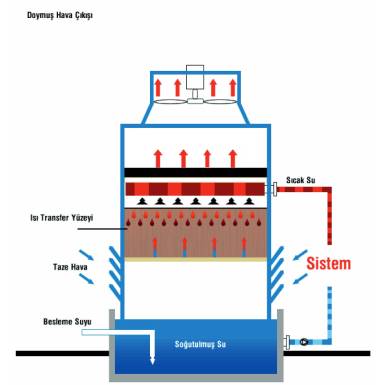
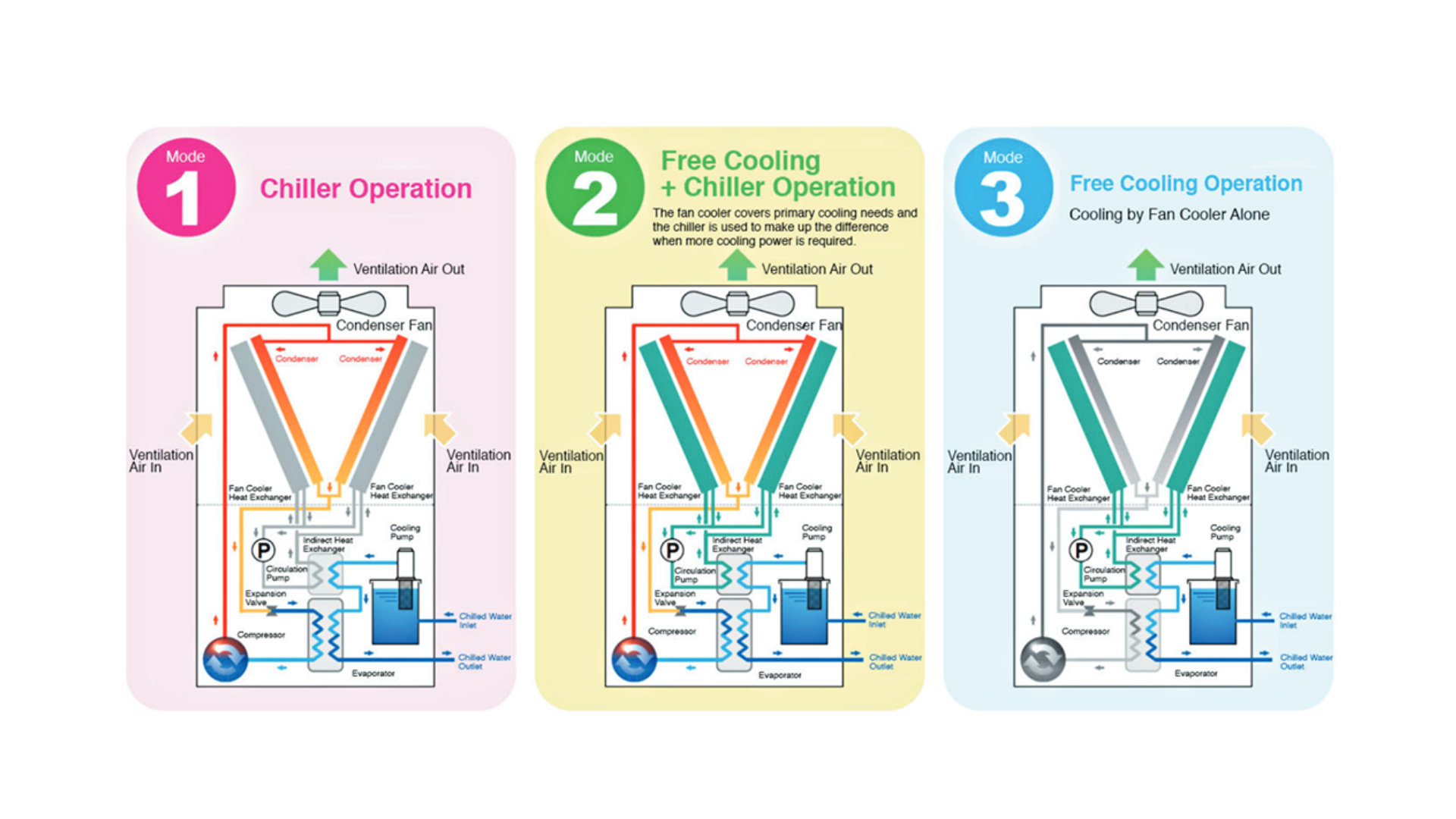
Free Cooling activates when the outdoor air temperature drops below a set threshold. This system circulates the cooling water and the outdoor air in a non-contact manner through an integrated exchanger in the chiller (e.g., Plate or Shell&Tube type).
-
Outdoor air cooling: The cold outdoor air cools the cooling water passing through the exchanger.
-
System Integration: This cooled water is used to meet the cooling needs inside the facility.
-
Compressor Deactivation: During this process, the chiller's energy-consuming compressors do not work or work at partial load, which provides a significant amount of energy savings.
Energy Efficiency and Cost Advantages
The Free Cooling system can provide 30% to 70% energy savings by stopping the operation of chiller compressors or running them at partial load during certain periods of the year. This means a significant decrease in electricity bills, while also reducing maintenance costs and extending the system's life due to less compressor operation. This technology ensures a quick return on investment.
Environmentally Friendly and Reliable Solution
Free Cooling also reduces the use of refrigerant for cooling when compressors are not working. This minimizes the environmental impact by reducing the carbon footprint. Thanks to reliable and smart control systems, the facility's cooling needs are constantly monitored, and the system is ensured to operate in the most efficient mode. It simplifies operational processes with its structure that can be integrated into automation systems.
Free Cooling is an excellent solution for data centers, industrial process cooling applications, and commercial buildings that have high cooling needs throughout the year but also experience cold seasons.